#White Papers
Back to school for LED lighting
How to create lighting conducive to learning ?
Whether in the classroom or in the workplace, lighting plays an essential role in well-being and performance. It is not enough to simply provide an adequate level of brightness; other parameters must be taken into account, such as the direction of the light, the color temperature, and the intensity of light required for different tasks (reading from the board, writing on paper, working on a screen, etc.). .
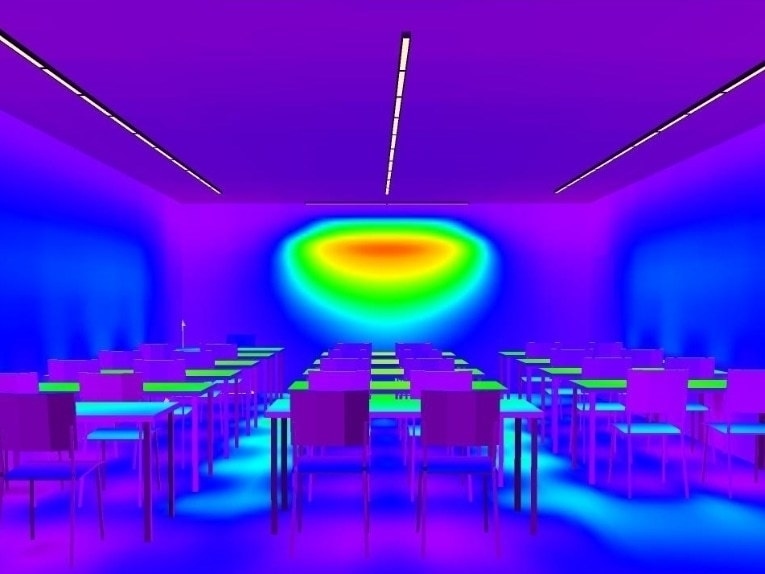
ACTiLED Lighting offers customized lighting studies on request. These studies determine the most suitable lighting configurations to create an optimal environment for learning and professional activity.
Lighting designed to limit glare
In classrooms and offices alike, limiting glare is essential to ensure visual comfort for all users. Poorly adapted lighting can cause eye strain, headaches, and even reduced concentration and alertness. For teachers, glare makes it difficult to project content onto boards or screens, reducing their readability for students.
It is therefore strongly recommended to choose low-glare lighting with a maximum Unified Glare Rating (UGR), particularly in the following situations:
Motor skills areas, where students may be required to lie on the floor
- Activities requiring high visual accuracy and good color rendering, such as laboratory work or art classes
There are many benefits to glare-free lighting:
--> Significant reduction in visual fatigue and headaches
--> Improved concentration and attention span
--> Reduced glare on shiny surfaces, such as whiteboards and screens
Asymmetrical beam lighting
The positioning of light fixtures is strategic for providing good lighting without causing discomfort. Appropriate lighting with light directionality creates a comfortable lighting environment.
ACTiLED Lighting's range of LED luminaires includes linear fixtures with asymmetrical optics that allow light to be directed towards specific areas such as paintings, desks, work areas, etc.
The ACTiLine4330A and ACTiLine4330E also offer uniform light distribution, avoiding shadows and reducing eye strain.
Energy saving: LED lighting is top of the class!
Lighting systems can be equipped with smart devices that adjust light intensity and the number of light points while optimizing energy consumption.
Lighting controlled to respect the circadian rhythm
Adjusting the color temperature of lighting according to the time of day helps to better respect students' natural biological rhythms. At the start of the day, cool white light promotes wakefulness, stimulates alertness, and optimizes concentration, making it ideal for activities requiring sustained attention. On the other hand, in the middle or end of the day, warmer light, similar to natural evening light, helps to create a calming atmosphere, conducive to quiet time or relaxation before the end of classes.
This approach helps to support the circadian cycle of elementary, middle, and high school students and college students by creating a lighting environment in harmony with their physiological needs.
To implement this type of dynamic lighting, several control and dimming solutions are available in the ACTiLED Lighting catalog:
- Dimming
- DALI, DMX 512, or Casambi control systems, depending on the technical requirements of the project and the desired level of flexibility.
ACTiLED Lighting offers a wide range of LED lighting solutions for workspaces, classrooms, and offices.
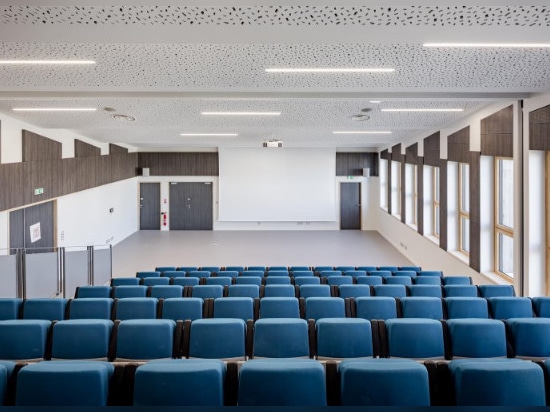
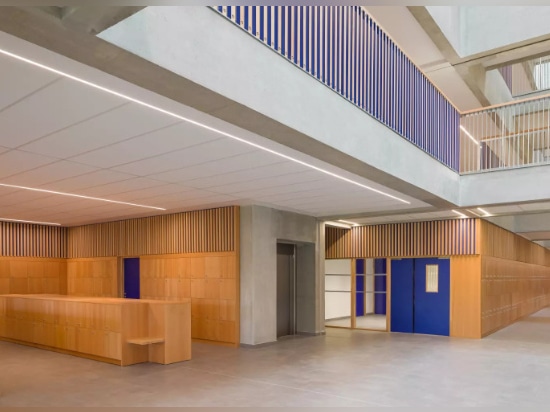
- Light lines for large spaces such as amphitheaters, university libraries, learning resource centers, dining halls, etc.
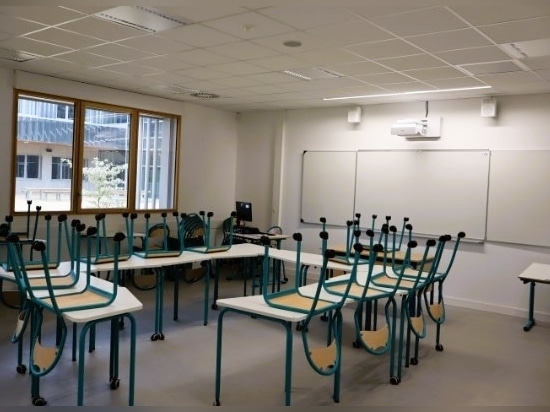
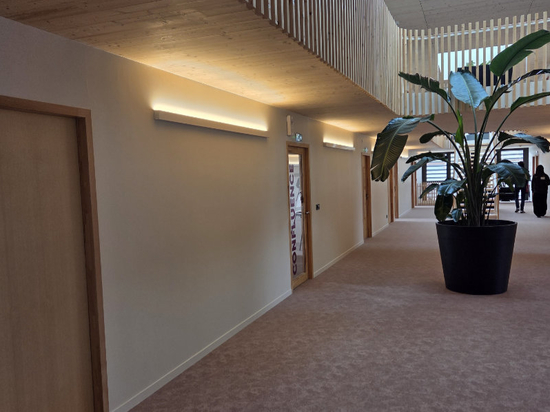
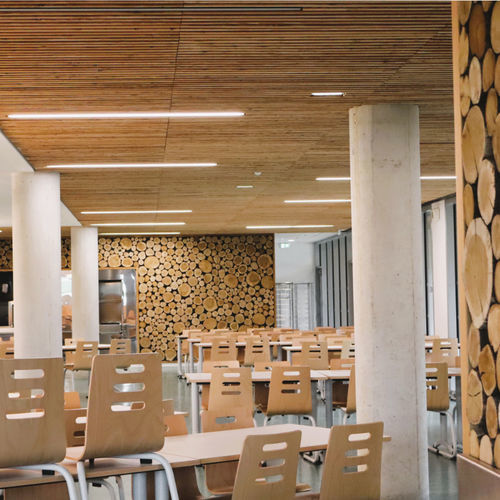
- Linear lights recessed into false ceilings or wood-slatted ceilings for classrooms, hallways, etc.
- LED tubular lights for indoor and outdoor spaces (covered playgrounds, reception areas, bicycle parking areas, playgrounds, etc.)
For your lighting project, contact the ACTiLED Lighting team.