
#Industry News
Colosseo Metro Station, Rome
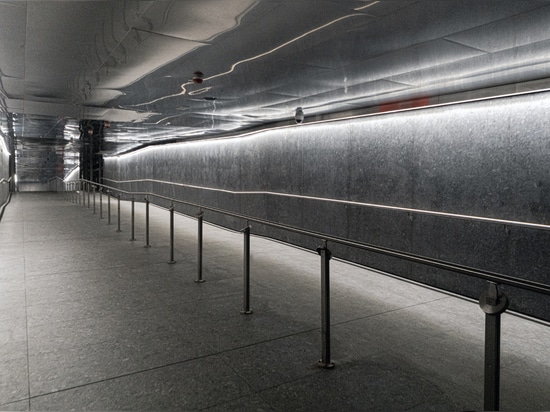
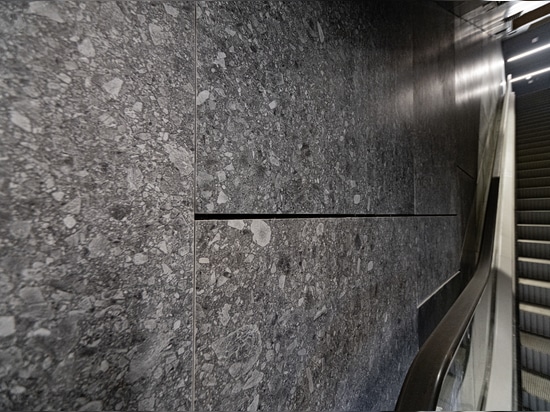
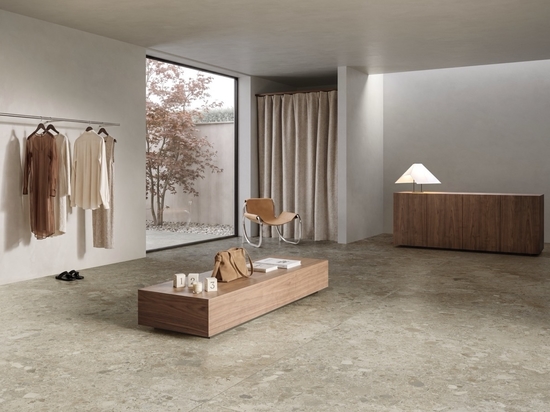
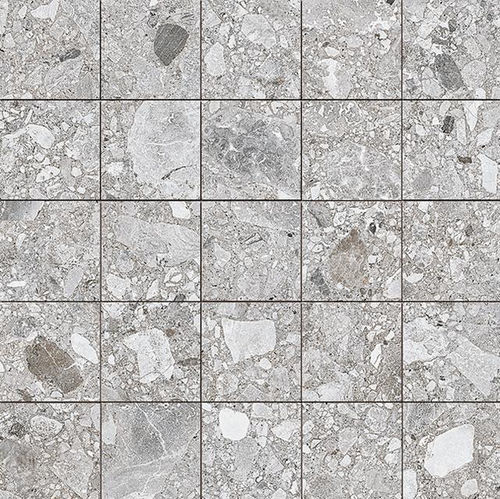
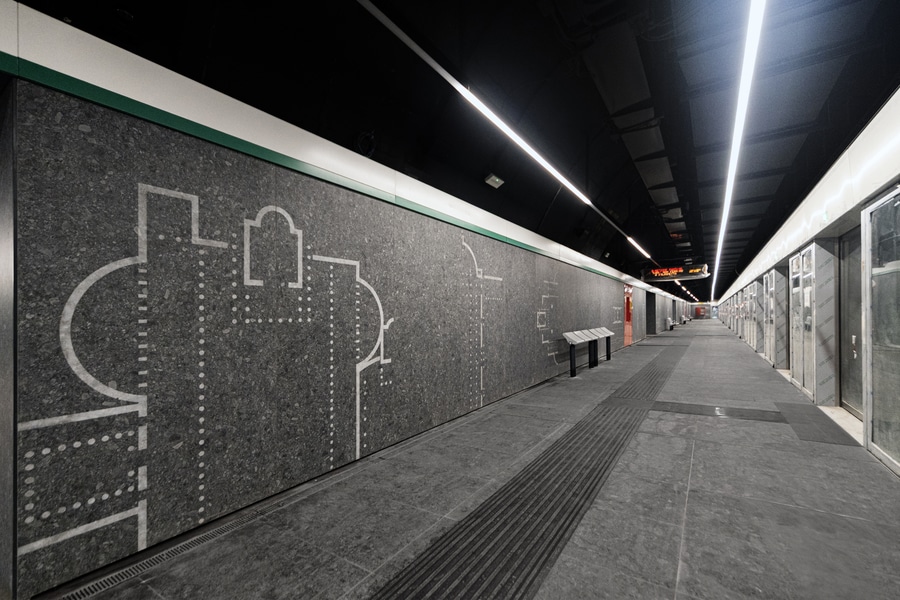
The Colosseo Metro Station in Rome has been tiled using the Pietre di Paragone porcelain stoneware collection by Casalgrande Padana, in the colour Gré Nero.
The design project for the Colosseo Metro Station in Rome, by the architects Andrea Grimaldi and Filippo Lambertucci, with the architects Livio Carriero, Amanzio Farris, Davide Leogrande, Edoardo Marchese, Valerio Ottavio and Leo Viola, has won first prize in the Large Surfaces and Façade Cladding category of the 13th edition of the Grand Prix architecture competition, for the reasons indicated below:
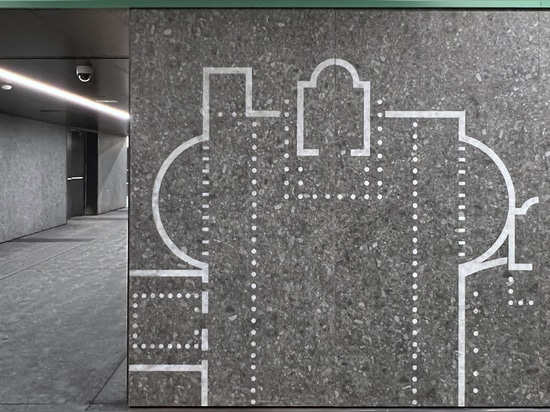
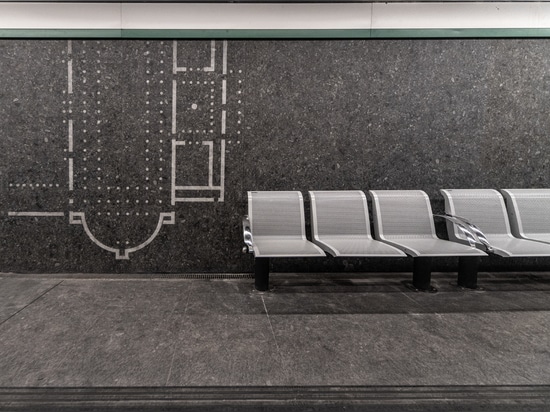
“The dark grey cladding material used for both flooring and vertical surfaces draws attention to the dimensions of the spaces, and together with the incisions in the architectural layouts obtained by sanding, gives a museum-like appearance to the through areas and the surface connections, creating an immersive space projected towards the monument above.”
Located in an area already impacted by profound urban development, the Colosseo station is comprised within a setting of exceptional archaeological and urban value. For this reason, the infrastructure was required to provide a design response commensurate with the importance and quality of the surroundings.
During the preliminary operations in preparation for the construction of the station, a number of significant discoveries came to light that are key to an understanding of the area, including the identification of a series of wells originally conceived as functional elements and subsequently turned into cultic deposits. These discoveries proved to be authentic spatio-temporal core drilling operations, the outcome of which inspired the design of the spaces that make up the station.
The wells were a key element in the spatial narrative that departed from them and subsequently expanded throughout the surrounding area.
The figure of the well penetrating into the depths of the earth in search of a precious element, water, is a splendid metaphor for archaeology, which digs down into the earth in search of significant traces of our past, fragments of history that shed light on bygone ages, long-since buried away and sometimes lost in the folds of time. Archaeological materials are always “precious”, because they allow us to reconstruct the conditions and contexts of the forgotten past on which subsequent ages have been founded, right up to the present day.
From this perspective, the underground station appears rather like a huge well that brings to light the fragments and stories of a remote past.
And it is this idea of the well, with its clear embodiment of the contrast between different conditions of the matter, between solid and void, darkness and light, opacity and brightness, that provided the inspiration for constructing the identity of the station and its spatial and narrative setting.
The layout of the space and the archaeological narrative are two faces of the same coin, both seeking to blend the spatial features with the communication elements to ensure a simple, immediate interpretation of both the functional pathways and the narrative episodes, the interaction of which has been studied to offer an integrated experience on several levels for different groups of users.
The space that makes up the station is defined by three key elements: a matt, “unpolished” material that forms the general backdrop, in the sense of a virtually dark, material casing; a bright, “precious” material tasked with identifying the elements that shape the archaeological narrative and the spatial experience of the materials that are part of it, and the light: the intangible yet decisive element that directs the whole experience.
These three elements form the backbone of the narrative, in which instances of communication between history and archaeology shine bright like gemstones set into the dark matter of the underground space. It is around this structure that the various levels of the station are organised, conceived as coming together in a continuum constructed by the experience of how the spaces traversed by travellers are perceived.
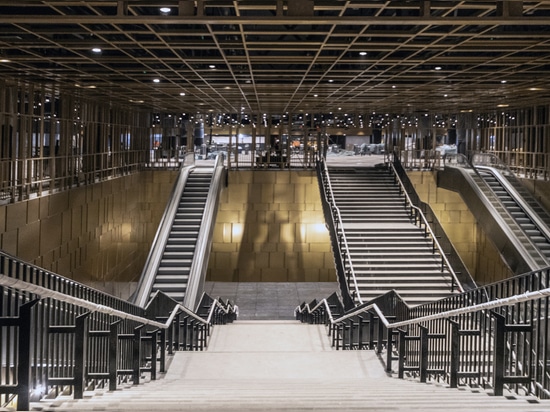
The lobby floor, located below street level, is the floor most affected by the proximity to the surrounding monuments, because it is situated at the original level of the adjacent Temple of Peace. The large space, unusual compared to the other stations, is reminiscent of a basilica; this aspect is highlighted by the project, and draws attention to the two ends, which face the Imperial Fora and the Colosseum respectively, and house two exhibition areas. In the centre is the large stairwell with intersecting flights of steps, a further element that differs from the other stations in the city, and offers a significant narrative opportunity thanks to its size and depth. This is why it was imagined as a glistening gemstone. The mezzanine floor is smaller, but with a similar layout: the centre is dominated by sets of stairs that fill the void of the Forum of the station, while the opposite ends have been conceived as splendid backdrops for the archaeological exhibits. Displayed at one end are the rooms found during the excavation operations, and at the other, a series of votive wells.
The ramps that lead down to the platforms have all been constructed in more compact spaces, and thus interpreted as an emotional spatial experience; the floor and wall surfaces, as in the preceding areas, form a material backdrop, while large, bright, bell-shaped structures open out above passengers’ heads, unexpectedly expanding the space upwards, like virtual wells in continuity with the theme of the richness that has collected in the subsoil over the centuries.
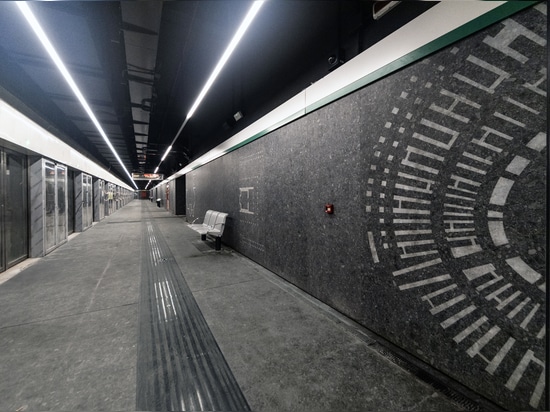
Although the architecture of the platform floor is rigorous and composed, the distinctive character of the station is maintained throughout by the cladding material, one of the signature features of the work. The tiles visible here from the windows of the trains passing through the station depict fragments of an architectural landscape composed of almost abstract figures, elements from a language that gradually acquires a voice as passengers move on up through the exhibits to the surface, where the extraordinary historical and archaeological setting of the Imperial Fora and the Colosseum finally bursts into a potent melody with a rich significance and profound beauty.
These evocative scenarios have been shaped through an extremely limited range of materials and colours, called upon to deliver a supremely clear representation of the twofold narrative device. The rough, cavernous dimension of the area underground is evoked, almost as if freshly quarried, by the seamless, continuous floor and wall surfaces, clad with stoneware tiles from the Pietre di Paragone collection by Casalgrande Padana, in the colour Gré Nero, particularly effective in creating continuous, material surfaces, without a dominant direction, while the salient archaeological and architectural features are marked with gold-coloured finishes on part of the sheet steel coverings, which light up in contrast with the background to highlight elements that are not only beautiful to look at, but also help guide users of the metro station.
Finally, artificial light has been used to create a distinctive atmosphere, using predominantly half-light to transform the characteristic features of a metro station into an unexpected opportunity to combine public archaeology with an everyday cultural experience.
Ph: Aldo Magnani