#Industry News
How can you design a modern playground that supports a child's development?
How can you design a modern playground that supports a child's development?
A playground isn’t just a luxury or a whim. It’s a child’s first laboratory of life. It’s a place where children learn courage, discover the limits of their bodies and minds, and where every climb and fall is a lesson that can’t be replicated at a desk. Modern playgrounds for children are spaces designed with development in mind—not just physical, but also social, emotional, and cognitive.
In this article, we show what a well-designed playground looks like and why its impact on a child’s development is greater than it might seem.
What equipment should be included on a playground?
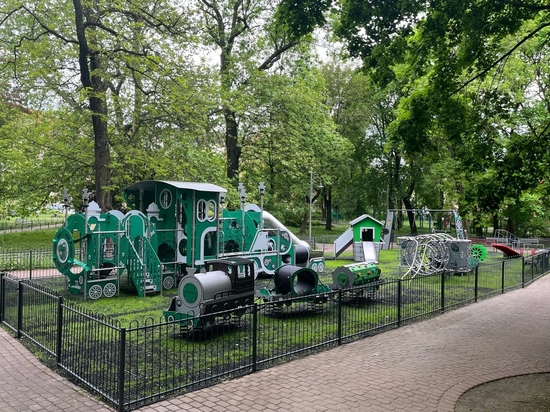
Modern playgrounds are thoughtfully designed spaces that combine play with development and safety. When designing them, it’s worth starting with tried-and-true, well-known structures: swings, slides, merry-go-rounds, and climbing frames. These are classic elements that have proven themselves for years as the foundation of children’s activity. In their modern versions, they feature high ergonomics, better adaptation to different age groups, and compliance with current safety standards.
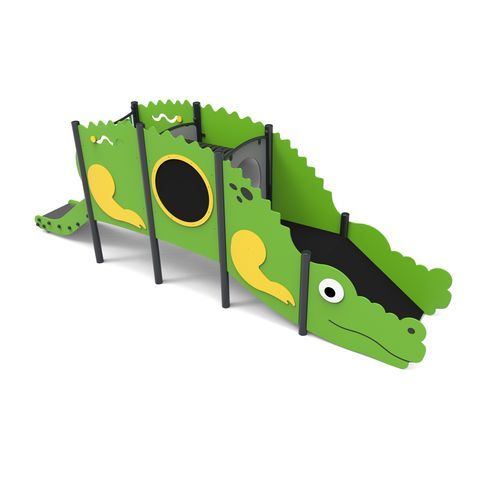
Alongside the classics, there should be equipment that develops various senses and motor skills—sensory panels, balancing platforms, rope structures, and observation towers. Thanks to these, children can not only exercise their bodies but also integrate their senses and develop coordination. Multifunctional solutions that combine several activities in a single structure are also a good idea, as they allow for optimal use of space.
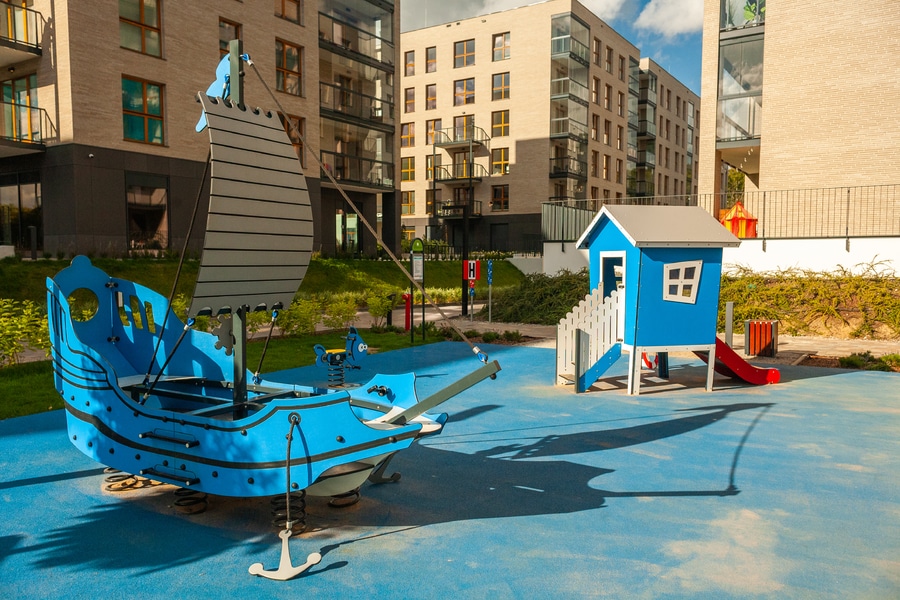
From the investor’s perspective, special attention should be paid to supporting infrastructure: safe surfaces, benches, canopies, bike racks, and lighting. Small-scale architectural elements that encourage longer stays and social interaction are also increasingly common, such as picnic tables, green spaces, or shaded areas. It is also important to consider accessibility—playground equipment should be designed to allow children with diverse needs to play together. This is not only a matter of compliance with standards but also has a tangible impact on the local community.
Why does a playground support a child’s development?
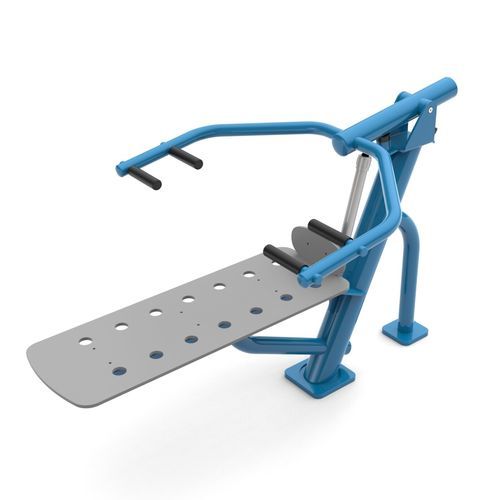
A playground is extremely important in a child’s development, influencing their physical, social, emotional, and cognitive growth. Every element of a playground can serve a therapeutic purpose—climbing ropes strengthens muscles and improves coordination, balancing teaches body control, and running and jumping support overall physical fitness. Regular activity improves children’s health and well-being, and also positively impacts their ability to concentrate and the quality of their sleep.
The social aspect is equally important. Children learn to function in a group, establish rules for play, negotiate, and compromise. It is a natural environment for building relationships, resolving conflicts, and developing communication skills. Playing together fosters empathy and teaches responsibility—both for oneself and for others.
The playground also helps develop emotional competence. Here, a child can experience the full spectrum of emotions—from joy and excitement to frustration and fear. Every success, such as overcoming a difficult obstacle, strengthens a sense of agency. Every failure becomes a lesson in resilience and coping with difficult emotions. As a result, children build self-confidence and develop intrinsic motivation.
We must not forget about cognitive development. A playground is a space for exploration, experimentation, and creative activity. Children learn to anticipate the consequences of their decisions, plan their next steps, and solve simple problems. These are activities that stimulate the imagination, teach cause-and-effect thinking, and strengthen the ability to concentrate.