#Product Trends
Selecting Suitable Insulating Windows and Doors Based on Thermal Performance (Part I): Introduction to Energy-Control Characteristics and Basic Performance Metrics
Faced with a dazzling array of door and window parameters, people often find themselves confused: Is a lower K-value always better? Can thermal conductivity represent overall system performance? How should we balance the shading coefficient?
Evaluation Method for Insulating Windows and Doors
After understanding the energy distribution governing window and door insulation, two boundary definitions must be clear when selecting a system.
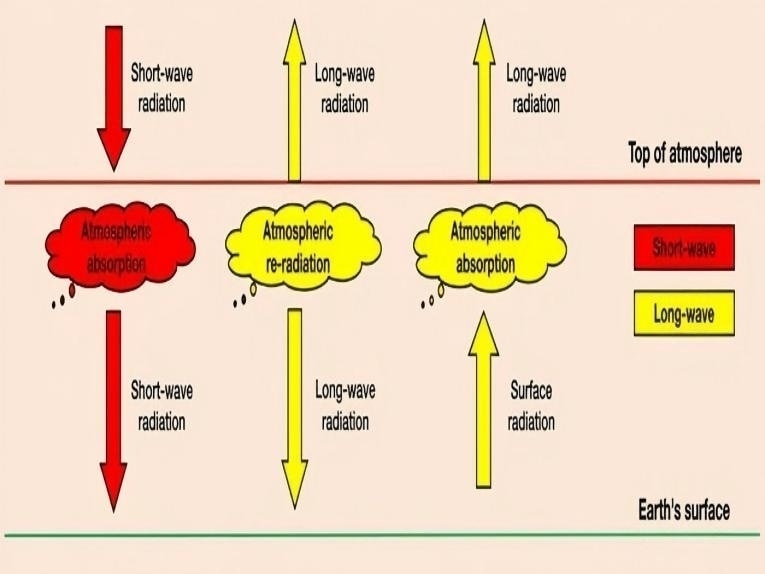
For thermal transmittance K(U), solar irradiance is set to “0”. Therefore, when the U-value is used to assess transparent materials, it evaluates only insulation against long-wave radiation.
The shading coefficient SC, or solar heat gain coefficient g, covers only the proportion of solar radiation at the Earth’s surface that passes directly through a transparent material. It therefore evaluates control of short-wave radiation.
Because glazing systems are transparent and provide daylight, they cannot be evaluated using K(U) alone, since solar radiation is excluded from its definition. SC alone is also insufficient.
System selection for a given region should combine both metrics. Thermal conductivity must not be used to evaluate a complete window or door system.