#Product Trends
Designing for Thermal Comfort in Tropical Hospitality: The Luna Beach Club Project in Bali
How thoughtful air circulation helps create comfortable open-air hospitality spaces while preserving architectural design and the guest experience.
Managing heat and humidity while preserving open-air architecture
Tropical hospitality spaces offer a distinctive connection to nature, from open-air beach clubs and resort terraces to semi-outdoor restaurants. However, high temperatures, humidity and solar heat gain can make maintaining guest comfort a significant design challenge.
Unlike fully enclosed interiors, these spaces cannot always rely on conventional air conditioning. Architects and hospitality operators must consider how air moves through the environment, how heat accumulates beneath roofs, and how to maintain comfort without compromising the openness and atmosphere that define tropical design.
Air circulation as part of the solution
Effective air movement can help improve perceived thermal comfort by creating a cooling breeze around occupants. High-volume, low-speed (HVLS) fans can be particularly useful in larger covered spaces with high ceilings, distributing air across broad areas while complementing the architectural design.
At the same time, every project requires a solution tailored to its specific conditions, including spatial layout, ceiling height, occupancy and exposure to outdoor elements. Air circulation can also complement an appropriately designed HVAC strategy where suitable.
From design principles to real-world applications
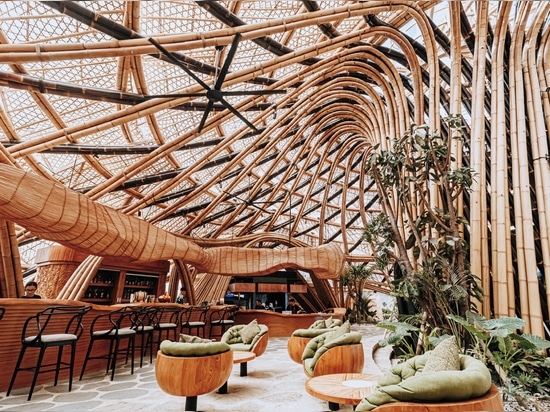
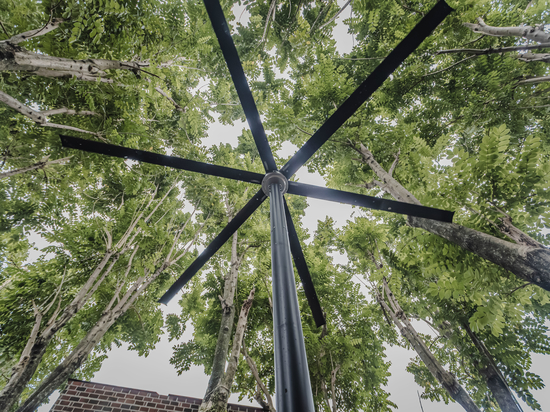
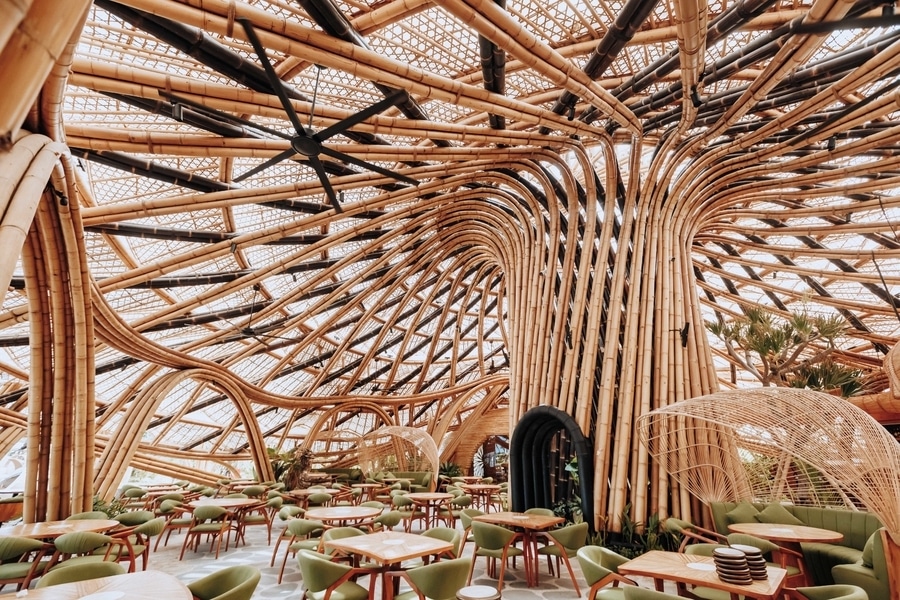
Projects such as Luna Beach Club in Bali demonstrate the relevance of considering air circulation within hospitality environments where guest experience and architectural character are equally important. The Anemoi Airlux fan installed at Luna Beach Club provides a real-world example of how air circulation solutions can be integrated into tropical hospitality spaces.
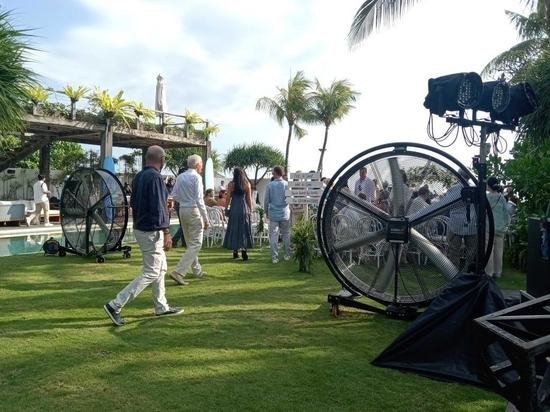
Other hospitality and commercial installations can further illustrate how air circulation strategies adapt to different spaces, climates and operational needs.
By integrating thermal comfort into the design process from the beginning, architects, developers and hospitality operators can create inviting environments that respond to tropical conditions while preserving their connection to the outdoors.