#Product Trends
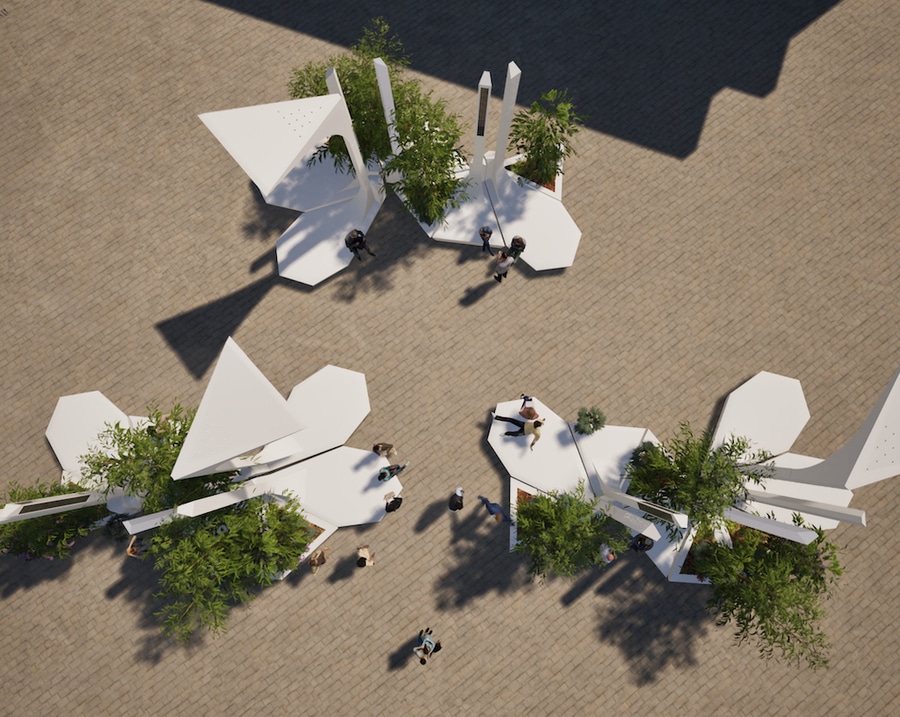
Borvo Cooling Station
How to make an urban space appealing
An overly concrete urban space is immediately identifiable: people pass through it, but they don’t stop there. And it’s not just a matter of temperature, but also of how the space is used. When a space offers neither comfortable seating, nor a sense of coolness, nor a clearly defined micro-space, it becomes a “hot void”: a place people hurry through, with no reason to linger.
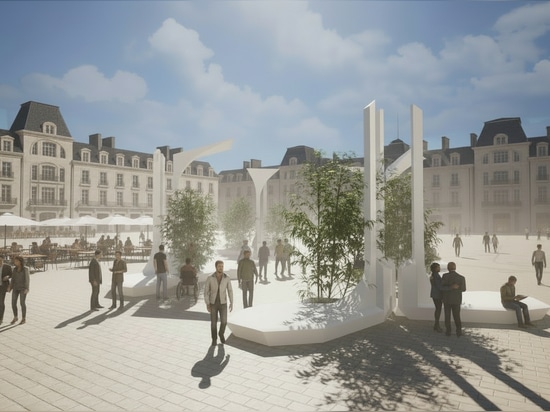
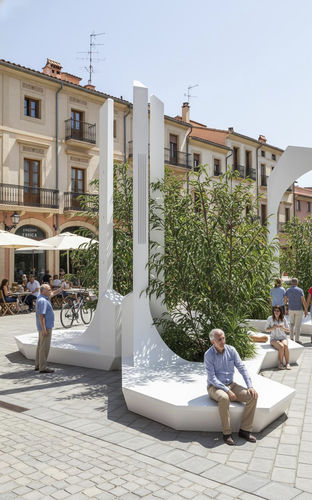
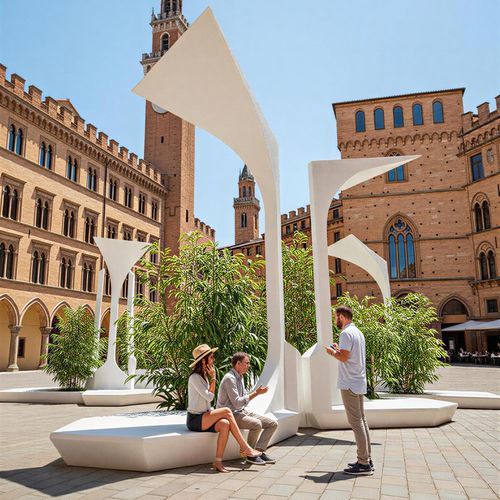
The goal of a successful “oasis of coolness” is therefore deliberately simple! To recreate a more livable zone on a pedestrian scale, exactly where waiting and gathering already take place.
To achieve this, the most effective solution is to enhance the atmosphere by creating a refreshing and soothing environment. We influence perceived coolness by introducing living elements, bringing back some beneficial humidity, reducing the dryness of the mineral soil, and organizing a resting spot that makes people want to stop.
Vegetation plays a central role here: it provides presence, texture, and a sense of breathing that contribute to a gentler ambient coolness. Water, collected and managed on-site, must serve a concrete purpose: to support the plants and stabilize beneficial humidity. This is why a passive system is often the best starting point!
A rainwater harvesting system allows you to build up a reserve and redistribute it naturally. When combined with capillary planters, these reserves become truly effective: water remains available at the root level, which ensures the plant’s stability and reduces the need for complex or emergency interventions. And in public spaces, this practical approach often makes the difference between a good intention and a sustainable design.
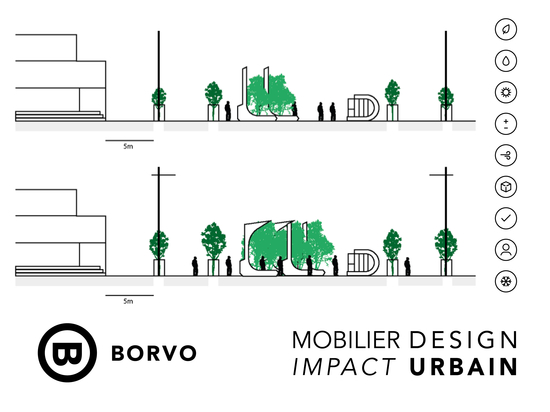
Finally, in our view, the right approach is to start small and clear: a single station and several planters grouped together, rather than an isolated element. We observe usage, make adjustments if necessary, and then expand in stages if the space naturally lends itself to it. This controlled progression often matters more than the size of the system at the outset.
And that’s often where success lies! Not in a theoretical promise, but in a solution that fits the location, is immediately understandable, and stands the test of time.