#Industry News
Less water, more hygiene: the new challenge for healthcare facilities
Reducing water consumption for better protection: the new challenge facing healthcare facilities
In hospitals and clinics, water consumption per bed can reach up to 450 litres per day, compared to 145 litres at home. This high consumption meets the specific needs of healthcare facilities: hand hygiene, sterilisation, showers, surface cleaning, laundry and catering.
However, more water does not automatically mean better hygiene. Excess water can mask inefficient practices and promote stagnation in pipes, creating an environment conducive to the proliferation of bacteria, such as Legionella, which can develop in less than 72 hours.
A targeted approach to reducing health risks
To limit contamination, standards require regular flushing of water points. In Germany, the Trinkwasser standard requires taps to be emptied after 72 hours of non-use, while in other countries, weekly flushing is recommended. Thermal shock at 70-80°C remains the gold standard method for combating Legionella, but it is energy-intensive and difficult to apply to older networks.
These measures, which are often uniform, can lead to water wastage without targeting the areas that are actually at risk.
In hospitals, high water consumption is normal. However, it is possible to adjust flow rates according to needs in order to limit wastage while ensuring health and safety. NF Médical has therefore reduced the flow rates of shower and washbasin taps.
Concrete solutions for combining hygiene and economy
• Flow-regulated mixer taps: 9 L/min for showers and 5 L/min for washbasins, for optimal use without waste.
• Thermostatic and sequential mixer taps: stable temperature, immediate temperature adjustment, user comfort and water savings.
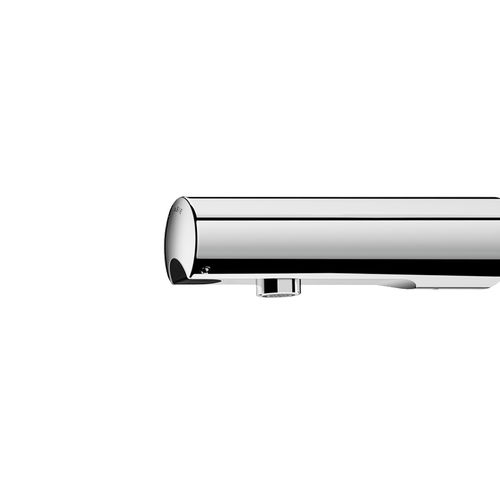
• TEMPOMATIC automatic taps: open on demand, automatic closure, elimination of unnecessary runoff.
• Cisternless flushes: constant water renewal, no stagnant water, enhanced health and safety.
• Targeted automatic flushing: programmed purges for infrequently used points, limiting bacterial growth.
Design and maintenance: sustainable levers
For architects and specifiers, integrating these solutions directly influences the design of the sanitary network: identifying underused water points, controlling and regulating temperatures, quickly repairing leaks and monitoring biofilm.
These actions ensure a safe, economically and ecologically optimised network, while facilitating maintenance and limiting health risks.
Towards sustainable and safe facilities
A rational approach to water optimises hygiene, reduces consumption, minimises bacterial risks and provides comfort and safety for patients and staff. The design and choice of equipment thus become essential levers for more sustainable hospitals and clinics.