#Product Trends
Home vs. Commercial Rubber Flooring: What’s the Difference (and Why It Matters)?
A quick guide for choosing well
Rubber flooring has become a go-to choice for everything from cozy home gyms to high-traffic fitness facilities. But here’s the key: rubber flooring for home use and commercial rubber flooring are designed for different demands. Choosing the right type can mean the difference between a floor that looks great for years—and one that starts curling, denting, or smelling “off” after a few tough workouts.
Let’s break down what each space really needs, and how to pick the best rubber gym flooring for your setup.
1) Traffic & Abuse Level: Daily Use vs. All-Day Use
Home rubber flooring typically handles lighter, more predictable use:
A treadmill, rowing machine, or stationary bike
Dumbbells and moderate strength training
A few workouts per week, usually by 1–2 people
Commercial rubber flooring must survive constant impact and footfall:
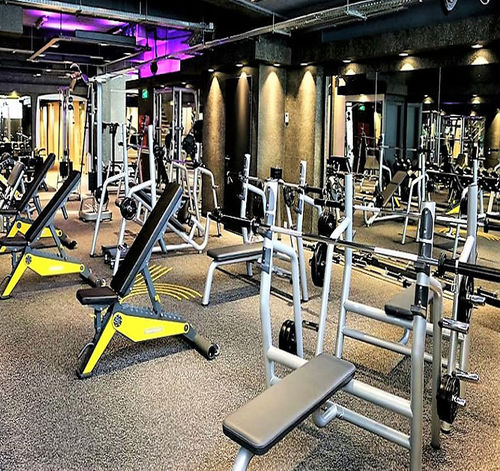
Multiple users all day long
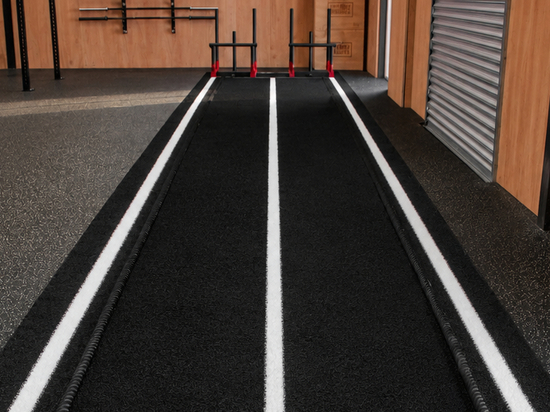
Heavy free weights, deadlifts, power racks, sleds
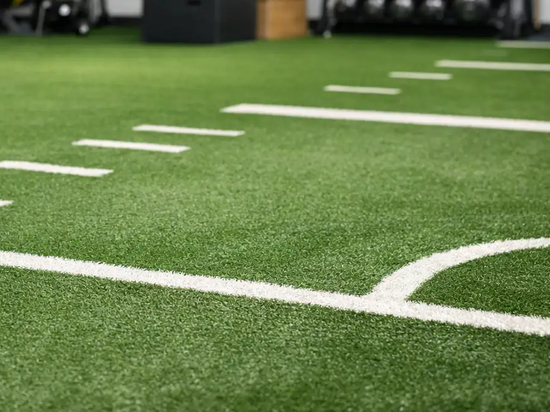
Group classes, high-intensity training, and functional fitness zones
Spikes in traffic during peak hours
That’s why commercial grade rubber flooring generally emphasizes higher density, greater durability, and stronger wear resistance—especially in busy gym flooring environments.
2) Thickness & Shock Absorption: Comfort vs. Protection
Thickness is one of the biggest differences in rubber gym mats and flooring systems.
For home gym flooring, many people choose:
* Thinner options for cardio corners and light weights
* Comfortable underfoot surfaces for yoga, mobility, and general workouts
* Simple installation (often puzzle tiles or easy-roll rubber)
For commercial gym flooring, thickness becomes a performance and safety feature:
* Thicker rubber helps with impact absorption and subfloor protection
* Better for Olympic lifting areas and heavy strength zones
* Helps reduce noise and vibration transfer—important for multi-level buildings
* If you’re building a serious weight area, commercial-grade options help prevent damage from dropped plates and repeated impact.
3) Wear Layer & Indentation Resistance: Looks Great vs. Stays Great
In a home environment, it’s easier to keep floors looking clean because:
- Fewer shoes and less grit tracked in
- Less equipment movement (machines stay in place)
- Fewer spills (hopefully)
In commercial settings, floors face:
- Constant use
- Equipment being dragged or rolled
- Chalk, sweat, disinfectants, and high abrasion
- Heavy point loads that can cause compression marks
That’s why commercial rubber flooring often focuses on indentation resistance, long-term surface stability, and a finish that stays attractive even after years of use.
4) Safety & Performance: “Good Enough” vs. Built for Liability
For homes, priorities are usually comfort, ease of cleaning, and basic slip resistance.
For commercial fitness spaces, safety needs rise fast:
* Slip-resistant rubber flooring helps in sweaty training zones
* Stable footing matters for squats, lunges, and HIIT movements
* Better traction supports athletic performance and reduces injury risk
* Fire ratings, indoor air quality considerations, and facility compliance can matter depending on location and building requirements
In short: commercial spaces need flooring that’s designed not just for workouts, but for real-world facility conditions.
5) Installation & Maintenance: DIY-Friendly vs. Professional-Grade Systems
Many homeowners love rubber flooring because it’s straightforward:
- Rubber tiles are easy to install
- Easy to replace a section if needed
Commercial installations often demand more planning:
- Large areas require consistent seams and professional layout
- Stronger adhesives or specialized installation methods may be required
- Maintenance routines are more frequent due to constant use
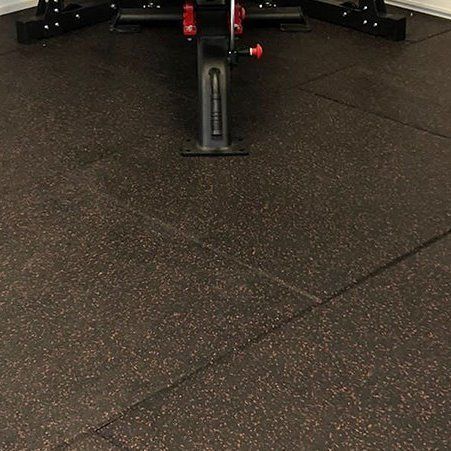
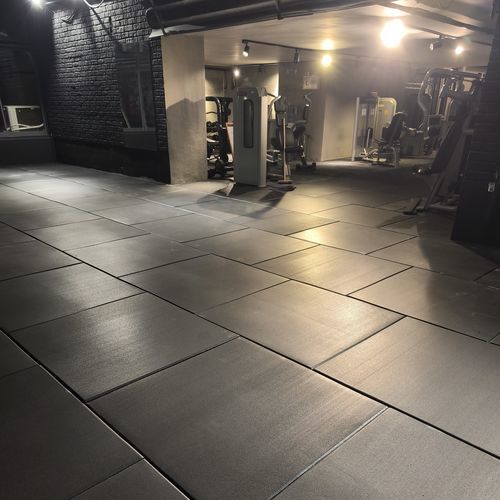
- In a busy gym, rubber flooring rolls and well-fitted tile systems can create a seamless, durable surface that cleans efficiently and holds up under pressure.
6) Sound & Vibration Control: Nice Bonus vs. Essential Feature
Noise is a common reason people choose rubber gym flooring at home—especially for apartment workouts.
But in commercial gyms, sound and vibration control becomes essential:
* Dropped weights create serious impact noise
* Vibrations can transfer through walls and floors
* Member experience depends on comfort, acoustics, and the feel of the space
* High-quality commercial rubber helps reduce noise, improve comfort, and protect the structure underneath.
SO WHICH SHOULD YOU CHOOSE?
A quick rule of thumb:
Choose home rubber flooring if your workouts are moderate, your equipment is lighter, and you want a comfortable, easy-to-install solution.
Choose commercial rubber flooring if you expect heavy weights, high foot traffic, frequent cleaning, and long-term performance with minimal wear.
If your “home gym” is basically a real strength facility—think racks, bumper plates, repeated deadlifts—then commercial grade rubber gym flooring is often the smarter long-term investment, even at home.
A TOP CHOICE FOR COMMERCIAL GRADE RUBBER FLOORING: BEKA RUBBER
When performance, durability, and long-term value matter, BEKA RUBBER flooring stands out as one of the best solutions for commercial gym flooring needs. Built for high-traffic fitness environments, BEKA’s commercial-grade rubber options are designed to support heavy training zones, improve comfort and traction, and deliver the reliable wear resistance that professional facilities demand.
If you’re designing or upgrading a fitness space and want rubber flooring that’s ready for real gym conditions, BEKA rubber flooring is a strong choice for commercial-grade results.
If you tell us about your space type (home garage gym, PT studio, CrossFit-style box, hotel gym, etc.) and what equipment you’ll use, our team can recommend an ideal rubber flooring thickness and format (tiles vs. rolls) for you. Contact us for more information.