#Product Trends
Functional training artificial turf explained
Understanding artificial turf for indoor
Functional training artificial turf explained: discover the best options and the reasons for it.
A turf lane that looks good on opening day but sheds fiber, loses traction, or delaminates under sled use becomes a facility problem fast. Functional training turf flooring is not a decorative finish. In commercial gyms and performance centers, it is a working surface expected to absorb repeated loading, maintain grip, reduce noise, and stay dimensionally stable under aggressive movement.
For buyers specifying flooring in strength and conditioning zones, the decision usually comes down to more than appearance. The turf has to support sled pushes, sprint drills, agility work, and general functional training without damaging the subfloor or creating premature wear. That means material construction, pile density, backing strength, and installation method all matter.
What functional training turf flooring is designed to do
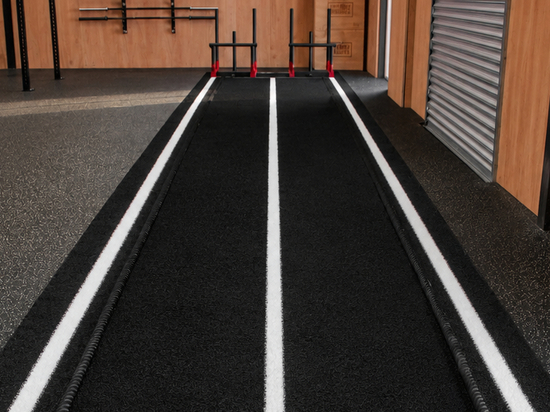
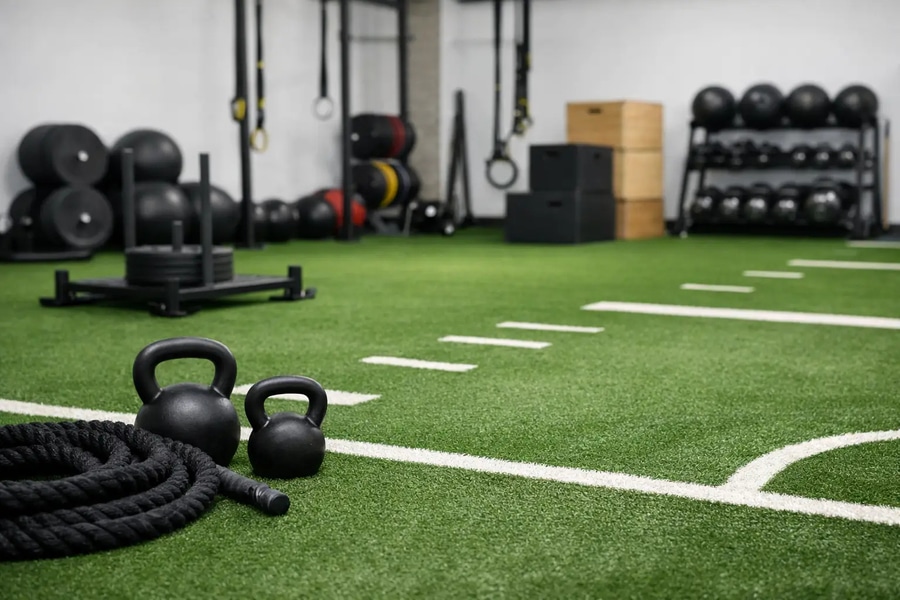
Functional training turf flooring is built for repeated athletic use rather than landscape-style visual appeal. In a commercial setting, the surface must provide consistent foot traction for acceleration and deceleration while also tolerating dragging forces from weighted sleds. Those two demands can conflict if the product is not engineered correctly. A soft, high-pile turf may feel comfortable underfoot, but it often performs poorly under lateral force and heavy abrasion.
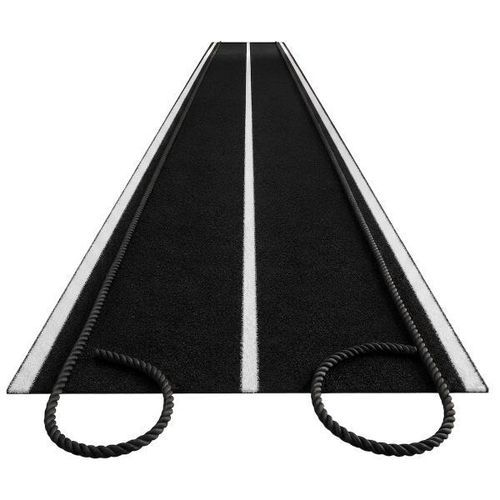
The better specification is usually a low-pile, high-density artificial turf system with a stable backing. This construction helps limit fiber roll-over, keeps movement predictable, and improves long-term wear resistance. For facilities that want painted lane markings, logos, or training zones, fiber quality also affects how well the surface retains a clean visual definition over time.
Another key function is impact and acoustic control. Turf alone does not do all of that work. In many projects, performance improves when the turf is paired with an appropriate underlayer, especially in upper-floor gyms or mixed-use buildings where noise transfer is a concern. The right system can help reduce vibration and sound while adding a degree of athlete comfort.
Why commercial facilities specify turf instead of standard gym flooring
Rubber flooring remains the standard choice for many strength areas, and for good reason. It handles dropped weights, offers reliable slip resistance, and delivers strong lifecycle value. But rubber does not replace turf in every zone. Where facilities need sprint starts, shuttle runs, resisted running, or sled work, turf gives operators a more sport-specific training surface.
That does not mean turf is automatically the better option across the room. It depends on use patterns. A compact boutique gym may only need a short lane for warm-ups and pushes. A collegiate performance center or large training facility may require multiple lanes with distinct markings and reinforced build-ups. The specification should reflect actual traffic, equipment loads, and cleaning expectations rather than trend-driven design.
For many projects, the most effective layout combines surfaces. Rubber supports free weights and machine zones, while turf defines movement-based training space. This approach improves functionality without forcing one material to serve every purpose.
Key performance factors in functional training turf flooring:
Fiber construction and pile height
Pile height has a direct effect on speed, traction, and wear. Lower pile systems are typically preferred for functional training because they create a firmer, faster surface with less distortion under load. If the fibers are too tall, sled use can flatten the yarn and create drag inconsistency. If they are too short without the right construction, the surface can feel harsh or overly thin.
Fiber resilience also matters. Commercial buyers should look at how the turf holds its upright structure after repeated use, not just how it appears in a sample swatch. High traffic lanes need yarn systems that resist matting and maintain performance after thousands of training cycles.
Backing strength and dimensional stability
Heavy sled work puts unusual stress on backing layers and adhesive bonds. A weak backing can stretch, ripple, or separate, especially if the subfloor is uneven or the installation is rushed. Dimensional stability is critical in long lanes where even minor movement becomes visible and hazardous.
For this reason, commercial turf should be assessed as a system, not just a surface. The backing, seam integrity, adhesive compatibility, and substrate preparation all affect whether the finished floor performs as specified.
Traction and athlete control
Too little grip creates slip risk during acceleration. Too much grip can increase joint stress during direction changes. Good turf sits in the middle. It supports controlled push-off without feeling sticky or unstable. This is especially relevant in multi-use spaces where users range from general fitness members to trained athletes.
Buyer expectations should also be realistic. Traction changes with maintenance, dust buildup, moisture exposure, and footwear. Even a high-quality turf surface will underperform if the lane is not cleaned properly or if installation leaves uneven transitions.
Shock absorption and acoustics
In performance-focused environments, comfort is not just a premium feature. It can affect fatigue, repeat use, and perceived quality. A properly built functional training turf flooring system can help moderate impact forces during repetitive drills, especially when paired with a shock-absorbing layer.
Acoustic control is another specification issue that becomes more important in commercial projects than in small private gyms. Sled work, foot strikes, and equipment movement generate noise. Facilities in retail centers, office buildings, hotels, and upper-level spaces often need a flooring system that helps reduce sound transmission as well as direct wear.
Installation decisions that affect long-term results
A high-performance product can still fail if the installation package is weak. Subfloor preparation is usually the first checkpoint. Concrete must be level, dry within acceptable limits, and structurally sound. Variations in the slab can telegraph through the turf and create seam stress or visible ridges.
Adhesive selection should match both the turf backing and the operating environment. Temperature swings, humidity, and cleaning chemicals all affect bond stability. In larger commercial projects, seam layout also deserves attention early in design. It is better to plan lane widths, directional traffic, and branding zones before material reaches the site than to solve them during installation.
There is also a practical decision between full-surface adhesion and looser installation methods. In serious training environments, full adhesion is generally the stronger choice because it limits movement and supports heavier use. Temporary or lightly fixed installations may reduce upfront effort, but they usually offer less long-term stability.
Maintenance is part of the specification
Commercial buyers often focus on thickness, color, and price while underestimating cleaning demands. Functional training turf flooring collects chalk, rubber particles, dust, and body oils. If that buildup is ignored, traction changes and the surface ages faster.
Maintenance protocols should be simple enough for staff to follow consistently. That includes routine vacuuming or debris removal, periodic grooming where needed, and prompt cleaning of spills. The goal is not cosmetic only. It is to preserve fiber performance and reduce premature replacement.
Durability claims should also be read carefully. A turf product may be durable in general traffic but less suitable for repeated sled dragging. Buyers should ask how the system performs under the exact movements expected in the space.
Where specification trade-offs usually happen
Most procurement decisions come down to balancing four variables: performance, lifecycle cost, installation complexity, and appearance. A lower-cost turf may satisfy budget targets at the start, but if it crushes early or requires replacement in a high-use lane, the total cost rises quickly. On the other hand, an overbuilt system may exceed the actual demands of a moderate-use training room.
This is why project context matters. A professional training center, school facility, franchise gym, and hotel fitness room do not need the same turf specification. The right answer depends on user intensity, equipment type, cleaning frequency, and subfloor conditions.
Manufacturing consistency should also be part of the evaluation. Commercial buyers benefit from suppliers with controlled production, documented quality systems, and tested product performance. For organizations managing multiple sites or phased rollouts, consistent material output matters as much as initial sample approval. That is one reason experienced manufacturers such as Beka Rubber focus on repeatable quality control, certified production standards, and system durability rather than cosmetic claims.
Functional training turf flooring performs best when it is specified as a working surface with measurable demands, not as an accent feature. The facilities that get the longest service life are usually the ones that align product construction, subfloor preparation, installation method, and maintenance plan from the start. If the surface is expected to carry real training loads every day, it should be chosen with the same discipline applied to every other performance-critical component in the facility.