#Industry News
Why Cheap Rubber Underlays Fail Over Time (And What to Specify Instead)
DENSITY MATTERS
In modern construction, selecting the right rubber underlay for acoustic insulation, vibration control, or floor protection is critical. However, under cost pressure, many projects still specify low-cost, low-density materials that compromise long-term performance.
At first glance, most recycled rubber underlays may look similar. In reality, their behavior over time can differ significantly—especially under continuous load.
Density vs Thickness: The Most Misunderstood Parameter
A common mistake in specifications is assuming that thicker underlays provide better performance. In fact, the key factor is: Density (kg/m³)
Density directly influences Compressive strength, dynamic stiffness stability, elastic recovery and long-term acoustic insulation.
Low-density rubber contains more air voids and less material mass, making it more prone to deformation and performance loss. Low-Density Rubber Underlays mean:
1. Permanent Compression (Compressive Creep)
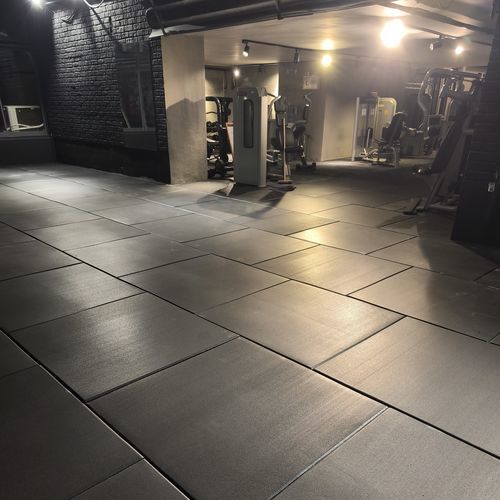
Under continuous loads—such as furniture, gym equipment, or floating floor systems—low-density materials deform over time, which leads to loss of thickness, reduced elasticity and structural instability.
2. Degradation of Acoustic Performance
In floating floor systems, rubber underlays act as a resilient layer controlling impact sound insulation (ΔLw). If density is insufficient dynamic stiffness increases over time, acoustic performance decreases and the system no longer behaves as designed.
3. Uneven Load Distribution
Low-density rubber compresses irregularly and creates weak points, meaning it can lead to premature system failure, something critical in fitness flooring systems, industrial applications and roof protection under solar installations.
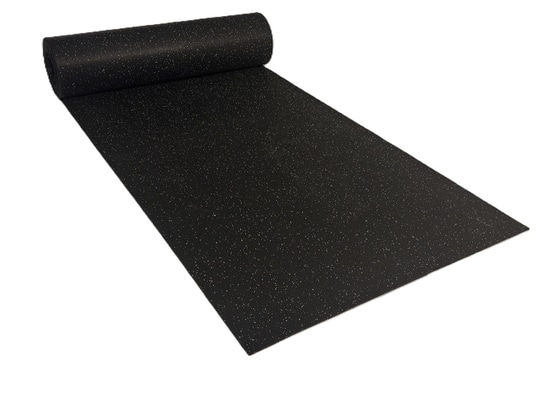
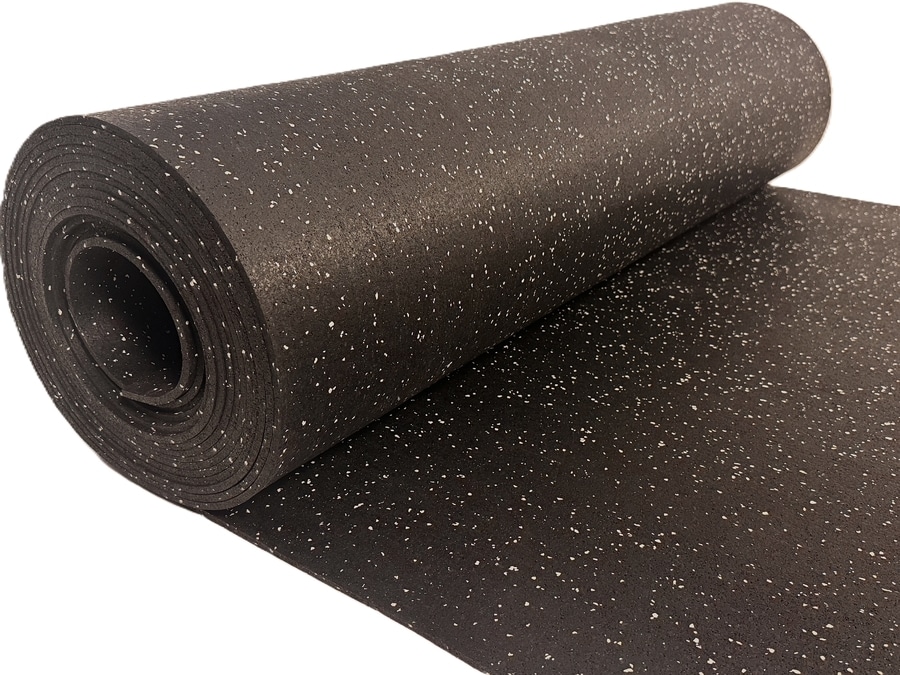
Why High-Density Rubber Underlays Perform Better? A high-density rubber roll (typically 800–1000 kg/m³) offers:
✔ Superior Load Distribution
Higher material mass allows better stress distribution, preventing localized deformation.
✔ Long-Term Acoustic Stability
Maintains dynamic stiffness and elastic recovery, ensuring consistent impact sound insulation over time.
✔ Reduced Permanent Deformation
Lower air content results in higher resistance to compressive creep.
✔ Proven Durability in Demanding Applications
It is important to understand that performance depends on the correct balance between density, dynamic stiffness and elastic recovery. A poor specification or choosing low-density rubber underlays can lead to acoustic complaints in residential buildings, loss of system performance within a few years, structural issues in flooring systems and above all, costly replacements and reputational risk.
When selecting a rubber underlayment for construction, it is recommended to specify:
Density ≥ 800 kg/m³ (depending on application)
Tested dynamic stiffness (EN ISO 9052-1)
Verified impact sound insulation (EN ISO 10140)
Low-cost rubber underlays do not fail immediately—they fail progressively, compromising the performance of the entire flooring system.
For construction professionals, the key takeaway is clear: density is one of the most critical parameters defining long-term performance.