#Product Trends
How to reduce Gym noise effectively
Important details about sound insulation in gym flooring
In the following lines, we will analyze the main causes and how to reduce Gym noise effectively. Let´s start by mentioning that there is airborne sound (music, voices, noise from weights being placed, etc.) and structure-borne impact noise. These are two different noise sources and the way we handle both of them, especially in mixed-use buildings, will save us a lot of trouble, headaches and even legal problems.
A barbell dropped on a concrete slab can travel far beyond the weight room. It disrupts adjacent training zones, creates complaints in mixed-use buildings, and accelerates wear on both equipment and subfloors. For operators, architects, and procurement teams, knowing how to reduce gym noise is not just about comfort. It is a facility performance issue tied to acoustics, safety, member experience, and long-term maintenance.
The main source of gym noise is not always airborne sound. In many commercial facilities, the more serious problem is structure-borne impact noise. That includes dropped weights, sled pushes, treadmill vibration, free weight movement, and repeated foot strikes in functional training areas. Once vibration enters the structure, it becomes harder to control with surface-level fixes. That is why effective noise reduction starts at the floor system.
How to reduce gym noise effectively at the source
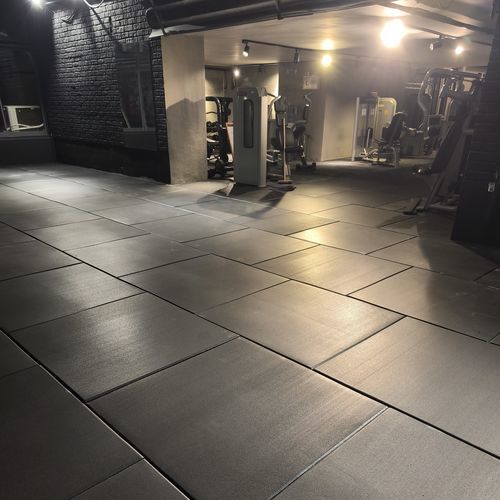
If the goal is measurable noise control, the first step is to separate loud activities from hard, reflective surfaces. Concrete, ceramic, and thin vinyl finishes do very little to absorb impact. They reflect sound into the room and transfer vibration into the building. In contrast, high-density rubber flooring systems are designed to absorb shock, reduce rebound, and limit vibration transfer under load.
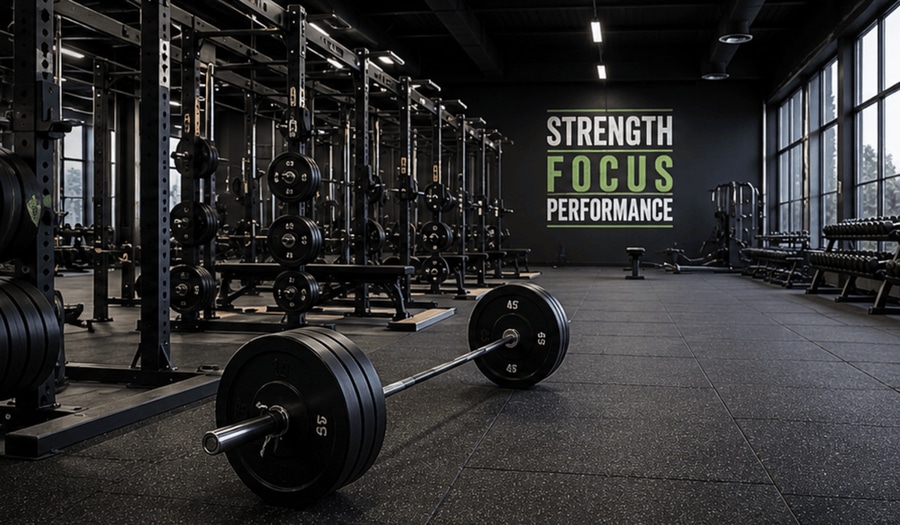
For commercial gyms, thickness matters. A light-duty fitness studio with bikes and bodyweight training has different acoustic demands than a strength area with deadlifts and free weights. In practical terms, 6 mm to 8 mm rubber may be acceptable for general fitness zones, while 20mm to 30mm is more appropriate for heavier use. Platforms, lifting zones, and high-impact areas often require thicker systems or dedicated shock pads beneath the finished surface.
Material composition also affects performance. Rubber rolls create fewer seams and provide consistent coverage across larger spaces, which helps with both installation efficiency and vibration control. Rubber tiles can be useful where modular replacement is a priority, but seam integrity and substrate preparation become more important in high-load applications. A poor subfloor or uneven installation can reduce the acoustic benefit of even a high-quality surface.
Flooring is the primary acoustic control layer
Many operators try to solve gym noise with wall panels or ceiling treatments alone. Those products can help reduce echo and improve speech clarity, but they do not address the main impact events happening at floor level. If the facility includes free weights, racks, functional training, or cardio equipment, the flooring system is the first acoustic control layer to be correctly selected.
A well-designed rubber floor system does three things at once. It absorbs some of the force at impact, reduces the vibration transmitted into the substructure, and protects the slab from point-load damage. This is especially relevant in upper-floor gyms, mixed-use developments, hotel fitness rooms, and school facilities where adjacent occupancy is sensitive to noise.
There is also a trade-off to manage. Softer systems can improve comfort and sound reduction, but excessive softness may affect equipment stability or athletic performance in certain zones. Cardio equipment, selectorized machines, and rolling loads require a surface with enough dimensional stability to support safe operation. The right approach is not to make every area as soft as possible. It is to match the flooring specification to the use case.
How to Reduce Gym Noise Effectively
BEKA SPORT and its COLD proccesed rubber tiles handle efffectively impact sound absorption. Tested according to ISO 10140 and ISO 717-2, BEFIT PRO 20mm rubber tiles offer an impressive 26 ΔLw impact sound reduction. Choosing a BEFIT PRO 30mm will increase that impact sound reduction.
Layout and zoning reduce noise before it spreads
How equipment is arranged has a direct effect on perceived and transmitted noise. Heavy lifting areas should be grouped together and placed away from quiet zones such as stretching rooms, offices, reception desks, or recovery spaces. If the building allows it, weight training should be located on the ground floor or over structurally reinforced areas rather than on elevated slabs with sensitive occupancy below.
Distance helps, but isolation helps more. A dedicated free weight zone with thicker rubber surfacing, lifting platforms, and controlled equipment spacing will perform better than a mixed-use room where high-impact and low-impact activities compete acoustically. Treadmills and rowers should not be installed directly against partition walls if those walls connect to occupied spaces. Even small layout adjustments can lower nuisance vibration.
Ceiling height and room geometry also influence the result. Long, hard surfaces create more reflection and make a room feel louder than the actual source level would suggest. In those cases, flooring controls impact while wall and ceiling treatments manage reverberation. One does not replace the other.
Equipment choices matter more than many buyers expect
Noise control is not only a flooring issue. Equipment design, maintenance condition, and accessory selection all affect the sound profile of a gym. Metal-to-metal contact, loose bolts, worn bushings, unstable benches, and unprotected storage systems all generate avoidable noise. In commercial settings, those problems compound quickly.
Bumper plates are a standard example. They do not eliminate sound, but they reduce impact severity compared with cast iron plates, especially when combined with the right platform construction. The same logic applies to kettlebells, dumbbell cradles, and rack protection points. If hard equipment repeatedly strikes hard surfaces, the acoustic penalty is immediate.
Maintenance is often the missing piece. A treadmill with worn isolators or a rower on an uneven floor can create constant low-frequency vibration. Tightening hardware, replacing damaged feet, leveling equipment, and inspecting moving parts are basic operational steps, but they directly support acoustic performance. Buyers evaluating how to reduce gym noise should treat preventive maintenance as part of the specification strategy, not just an after-installation task.
Subfloor condition and installation quality are decisive
Even a high-performance rubber product can underperform if the substrate is not prepared correctly. Cracks, moisture issues, uneven slabs, weak adhesive selection, or poor seam execution can create gaps that reduce stability and allow more movement under load. That movement becomes noise.
For that reason, acoustic performance should be evaluated as a system, not as an isolated product claim. Flooring thickness, density, surface finish, adhesive compatibility, and subfloor flatness work together. In heavy-use gyms, installation quality has a direct relationship to long-term acoustic consistency. A floor that shifts, curls, or delaminates will not maintain the same impact control over time.
Commercial buyers should also account for cleaning and environmental exposure. Some surfaces maintain their structure and resilience better under repeated moisture, sweat, cleaning chemicals, and rolling traffic. A flooring system that hardens prematurely or loses surface integrity may still look acceptable but perform worse acoustically after extended use.
How to reduce gym noise in different facility types
The correct solution depends on the facility model. A boutique studio focused on classes will usually need echo control and moderate impact absorption, with attention to group movement and music levels. A full-service health club requires more zoning discipline because cardio, strength, and recovery functions coexist in one envelope. A performance training center or collegiate facility places greater emphasis on impact resistance, platform design, and subfloor protection.
In apartment gyms and hotel fitness rooms, the tolerance for low-frequency vibration is much lower because nearby occupants are not participating in the activity. In these environments, acoustic underlayers, thicker rubber systems, and strict limits on free-weight use may all be justified. By contrast, in a ground-floor warehouse gym, the priority may be durability first, with acoustic control still important but easier to manage structurally.
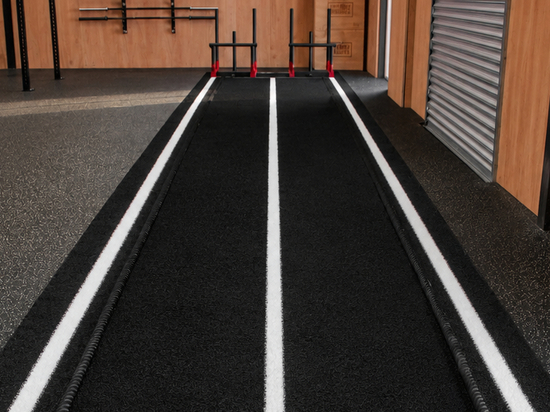
This is where product-led specification matters. Manufacturers with broad sports surfacing portfolios can usually recommend more precise combinations for lifting zones, machine areas, sprint lanes, and multi-use spaces instead of forcing one material across the entire facility. Beka Rubber, for example, operates in this specification-driven segment where durability, shock absorption, and sound insulation must be evaluated together.
What commercial buyers should ask before deciding
When comparing flooring and noise-control options, buyers should move beyond general claims like quiet, cushioned, or heavy-duty. The better questions are more technical. What impact loads will the area receive? Is the space above grade or on slab? What is below, beside, and around the room? Will the floor support racks, sled work, and rolling loads? How much maintenance access is needed? What acoustic performance is required in practice, not just in marketing language?
It also helps to define what kind of noise is causing the problem. If members complain about echo, then reverberation control needs attention. If tenants below complain about thuds and vibration, then the floor assembly is the first area to correct. These are different problems, and they require different solutions.
The most effective projects treat gym noise as part of the facility design brief from the beginning. Retrofitting is possible, but it is rarely as efficient as selecting the right flooring thickness, layout, and equipment protection strategy before installation starts.
A quieter gym is usually a better-performing gym. It feels more controlled, places less stress on the building, and supports a more professional training environment. When noise is addressed at the source – with the right flooring system, zoning plan, and equipment decisions – the result is not just lower sound. It is a facility that works harder for longer.